Free Airport Parking

Sunday, May 3, 2015

facts of traveling 5

Visa

Most visitors to Asia (Bhutan, Cambodia, Laos, Myanmar, Nepal, Vietnam, Sri Lanka, Thailand, The Maldives) require a valid Tourist Visa, which may be obtained from your nearest consulate of that country. When you book your holiday in Asia with us, we will send you the relevant visa information you require for each country you are visiting.

Health & Insurance

In general, visit your local general practitioner for information and routine shots for foreign travel including vaccines for influenza, chickenpox (or varicella), typhoid, hepatitis-A, yellow fever, polio, malaria, measles/mumps/rubella (MMR), and diphtheria/pertussis/tetanus (DPT). Immunization against hepatitis, cholera, tetanus, rabies, typhoid and dengue may be in order. In addition to the others, vaccinations against Japanese B encephalitis, tuberculosis and hepatitis B are sometimes recommended in Myanmar.
We also recommend carrying mosquito repellents as malaria can be contracted very easily in several parts of South-East Asia.
We highly encourage you to purchase travel insurance for your trip.

What To Pack

As a rule of thumb, visitors need to keep in mind that many South-East Asians are conservative in their dressing. Western clothing is acceptable and is worn by many, but in modest fashion. However while visiting shrines and religious places, visitors are recommended not to wear shorts, mini-skirts, vests, tank tops etc. Your knees and shoulders must be covered.
The most convenient footwear to bring are sandals, flip-flops and comfortable walking shoes that can be taken off easily. Although it is acceptable to wear shoes when walking in the compound of the temple, you would be required to take them off before you enter the chapel where the main Buddha image is placed. Slip-on shoes or sandals are useful for visits to pagodas or people’s houses, as you’ll save time taking your shoes on and off.
One should also avoid t-shirts or tops with images of Buddha, which is considered highly disrespectful.

When observing modesty in dress, also keep in mind that modest behavior will also be appreciated as public displays of affection, even between spouses are considered in bad taste in much of the continent.
Packing for a trip to Asia can be a challenging task, and depends on where you plan to be visiting. Check with your Trip Coordinator if you have any doubts.

Out & About

It is always a good idea to enquire first with your tour guide about the dress codes (if any) of the places you will be visiting before you set out.
Except in some places, photography is generally allowed every where. Ask for permission before taking photographs of temples, objects, and people. People generally have no objection to be photographed, however if someone objects, a visitor should abstain right away. Entrance tickets of places of sightseeing in general cover charges for photography, recording and parking.
You have full liberty to visit monasteries, monuments and places that interest you – your journey isn’t a ‘guided’ tour that you must adhere to. It is advisable to discuss your likes and preferences with your trip coordinator or tour escort before you set out for the day.
Please carry a couple of bottles of water while sight-seeing. Be mindful of your time in the sun and apply sunscreen lotion, as the weather can get hot during the summer months.

Don’t give to street beggars, no matter how hard it might be to refuse. Criminal mafias who profit from their misery enslave most beggars. If you want to give, a registered charity is the best choice. Avoid buying souvenirs and gift items from ‘touts’ in and around monuments. In case you do like something, please ask your Local Guide to help you bargain and pay the right amount.

Climate

It is difficult to pin down the best time to visit Asia weather-wise because of the wide range of climatic factors.
Your Travel Consultant can provide you with more detailed weather information depending on the season and the specific destinations you choose to visit.

Currency

Besides US Dollar, British Pound and Euro, many other currencies can be exchanged but some smaller destination currencies may have difficulty. Refer to www.google .com/finance/converter for the most up to date exchange rates.
The best exchangeable currency is the US dollar, although the Euro is widely accepted. Some other currencies can also be exchanged but perhaps with some difficulty and mostly in bigger cities and tourist centres. Vietnam’s unofficial currency is the US$ Dollar. Carrying a suitable amount of petty change enough for tips, in markets and for transport is recommended– about 50 UK Pounds / 70 USD is quite sufficient.
Whenever changing money, check every note. Do not accept any ripped notes, notes with marks and notes that are old as these may not be accepted as payment elsewhere. Remember, you must present your passport whenever you change currency.
To avoid additional exchange rate charges, travelers are advised to take traveler’s cheques in US Dollars or Pounds Sterling. Remember, you must present your passport whenever you change currency or travelers checks.

Accessing Money

Cash & Credit/Debt Cards
Direct payment of cash is most popular in South East Asia.
Small shops, restaurants and markets usually do not accept any other payment. Major credit cards (such as Visa, Master Card and to some extent American Express) are increasingly being used, especially in big cities and tourist places, but only in restaurants, hotels or big shopping malls with a transactional fee (3%-5%).
Carrying a suitable amount of petty change enough for tips, in markets and for food, drinks and shopping is recommended.
International Transfers
International transfers can be received via moneychangers affiliated with Money Transfer or Western Union. Please note that a hefty fee is often added to the transaction. To collect cash, you will need your passport and the name and reference number of the person who sent the funds.
Traveler’s Checks
Travelers’ checks are an easy method of carrying money around, and can be cashed at major banks (but not small banks in small towns).
Always keep a record of the checks’ serial numbers separate from your checks, along with the proof-of-purchase slips, and encashment vouchers. To replace lost travelers checks, you need the proof-of-purchase slip and the numbers of the missing checks (some places require a photocopy of the police report and a passport photo).

Communications

Plug sockets
Travel adapters are a good idea to carry, especially if arriving from the USA/Canada/South America.
Mobile phones
If you wish to have a cell phone at your disposal during the course of your trip then you can request your Trip Coordinator, driver, or tour escort to help you locate a mobile phone shop selling prepaid SIM cards. In addition you would have to purchase minutes for usage and the SIM card usually takes 24-48 hours to activate. You will need to carry a copy of your passport. It is advisable to purchase a SIM card on the first day of your arrival. Note: This service is not available in Myanmar.
Please keep in mind the power supply when thinking about bringing necessary adaptors for your electrical equipment.
Most hotels now have IDD phones in rooms and it is possible to send faxes from hotels and post offices. Be aware that most hotels charge considerable amounts for these services; please check with the hotel prior to arrival.
It may not always be possible to make international calls in remote areas. If you have worldwide coverage, you can bring your own mobile phone and use it to make domestic or international calls.
Check with your mobile phone provider for the costs before using it abroad; it may be expensive.
Here are some international access codes:
To the US, dial 001 + Code (without 0) + Telephone number
To the UK, dial 0044 + Code (without 0) + Telephone number
To CANADA, dial 001 + Code (without 0) + Telephone number
To AUSTRALIA, dial 0061 + Code (without 0) + Telephone number

Please be warned that apart from major tourist centers, internet connectivity in South-East Asia can be slow and hard to come by.

Internet

While larger cities will have internet kiosks, these don’t promise high speeds. Hotels will usually offer email facilities for a cost at a business center. Hotels will similarly offer the use of their telephone services for international calls at high rates.

Friday, April 10, 2015

Switzerland

The Top 10 Places in Switzerland


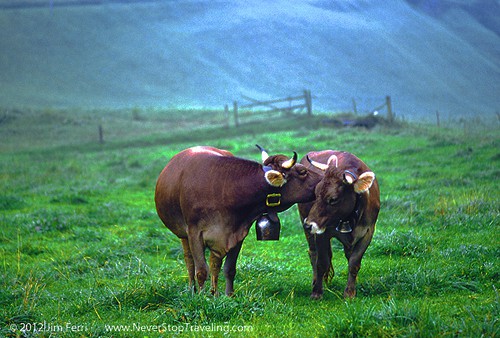
Swiss cows-ASwitzerland, one of Europe’s perennially popular travel destinations, has fascinated American travelers ever since the days of the legendary Grand Tour. While its reputation for après-ski chicness, Heidi-like mountain villages and outstanding world-class hotels is renowned among tourists, if you peel back the promotional veneer you’ll discover a multi-faceted destination that transcends the tourist-brochure hype and provides a world of experiences for the more sophisticated traveler.
For those travelers, here are the top tourism destinations in Switzerland, as reported by Switzerland Tourism. (Photos courtesy of Switzerland Tourism unless otherwise noted)

photo: Alejandro Forero-Cuervo

1. Zurich

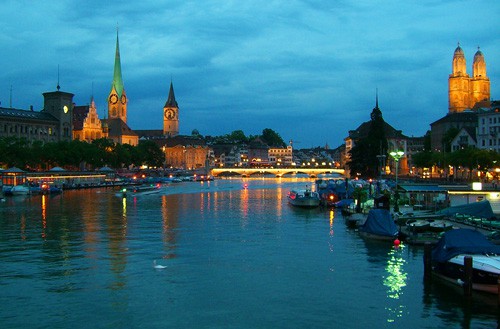
Zürich lies not only in the heart of Europe but also in the hearts of those who have made the city the top destination in Switzerland. Set on the northern shores of Lake Zürich with a magnificent view of the snowcapped Alps on the horizon, Zürich’s multicultural flair and variety of leisure activities makes it popular with travelers from all over the world.
The city’s downtown offers a unique mixture of attractions – over 50 museums and more than 100 art galleries, shops selling international fashion labels as well as Zürich designs, and the most flamboyant and lively nightlife in the country. Recreational activities range from sailing on the lake in the very heart of the city, to a spectacular hike on the Uetliberg Mountain.
The city is easy to reach, by train, plane or car. Its international airport is only a 10-minute train ride from downtown and Zürich’s Main Railway Station is regarded as a central European railroad hub.

photo: Kevin Gessner

2. Geneva

Set between nearby Alpine peaks and the hilly terrain of the Jura, French-speaking Geneva lies in the bay where the Rhone leaves Lake Geneva. With its humanitarian tradition and cosmopolitan flair, Geneva is the European seat of the United Nations and headquarters of the Red Cross, adding to its reputation as the “Capital of Peace.”
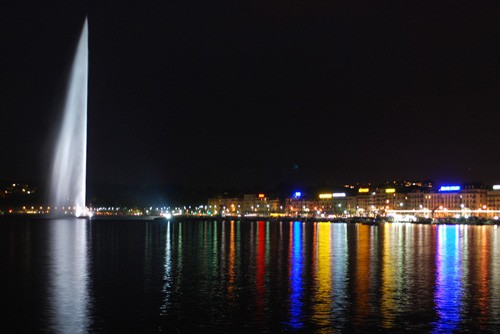
Travelers find the city’s old town, with its quays, lakeside promenades, elegant shops, parks and lively side streets, an inviting place to stroll. The famous Jet d’Eau, a fountain with a near-500 foot-high water jet that is set in Lake Geneva, is an icon of the city
Culturally, this city on the westernmost fringe of Switzerland has much to offer. International artists perform in the Grand Théâtre and the Opera House, and there’s a diverse range of museums including —  what else — the Musée international de l’horlogerie, a watch museum with a collection of jewelry watches and musical clocks.

photo: stevebrownd50

3. Lucerne

To many travelers Lucerne is the essence of Switzerland. The gateway to central part if the country, it sits picture-perfect on Lake Lucerne, set below a beautiful panorama of the Alps.
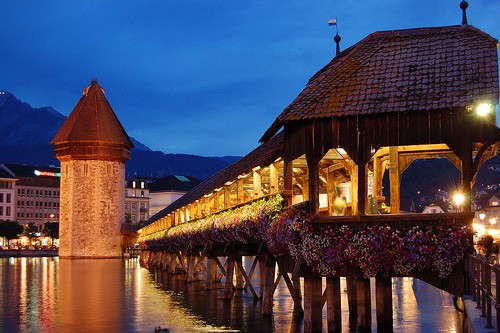
Add to this picturesque setting a car-free old town with gable paintings; a covered, medieval bridge in the center of town (one of the oldest covered wooden bridges in Europe); historic houses decorated with frescoes; and charming town squares, and you’ll understand why Lucerne is perennially popular. But the traditional also stands side-by-side with modernity here, and the town has earned a reputation for innovative design. The futuristic Culture and Convention Centre (KKL), designed by leading French architect Jean Nouvel, is one the architectural highlights of the town.
Outside Lucerne you’ll find beautiful views on a trip up one of its nearby mountains, and enjoy a great experience on a steamship cruise along the beautiful lake. The city is a good starting point for excursions about central Switzerland.

4.  Interlaken

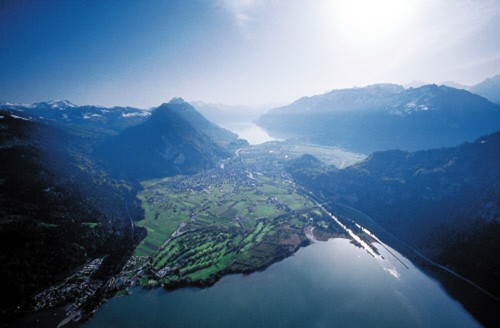
Interlaken, in Switzerland’s Bernese Oberland Region between Lake Thun and Lake Brienz, is presided over by the three mighty mountains: the Eiger, Mönch and Jungfrau.
Interlaken is considered the adventure capital of Switzerland and its more than 45 mountain railways, cable cars, chair lifts and ski lifts lead the adventurous to 150 miles of slopes and a dense network of hiking trails. Every day in the winter season, visitors benefit from the city’s central location by being able to choose from several different area ski regions.
In the warmer months those who like to paraglide head for Beatenberg-Niederhorn, a popular area just 7 miles away. Those with less lofty ambitions enjoy cruises on Lake Thun and Lake Brienz aboard excursion boats, including historic paddle steamers.

5. Lake Geneva Region

The Lake Geneva Region, encompassing Lausanne. Lauvaux and Montreux, has two UNESCO World Heritage Site listings and is the fifth most popular area of Switzerland.
The setting of Lausanne is so picturesque it’s not surprising the International Olympic Committee has been based here since 1914. The town, built on three hills, is surrounded by vineyard-covered slopes, with Lake Geneva at its feet and the Savoy Alps of France across the lake. The attractive old town, dominated by the cathedral regarded as Switzerland’s most impressive piece of early Gothic architecture, is filled with cafes and boutiques shaping the streetscape in the medieval city center.
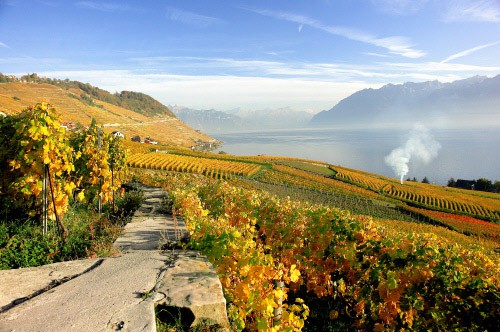
Nearby Lavaux is a wonderful world of vineyard terraces. At 800 hectares it is Switzerland’s largest contiguous vineyard area with terraces that not only offer magnificent views, but also produce such fine wines as St-Saphorin, Dézaley and Epesses. Travelers can taste them on visits to one of the charming pintes, mini-restaurants typical of the Lavaux.
Montreux, home of the world-famous Montreux Jazz Festival that takes place annually in June/July, is surrounded by vineyards set against the breathtaking backdrop of snow-covered Alps. Because of the exceptionally mild climate many plants associated with the Mediterranean, such as pines, cypresses and palms grow here.

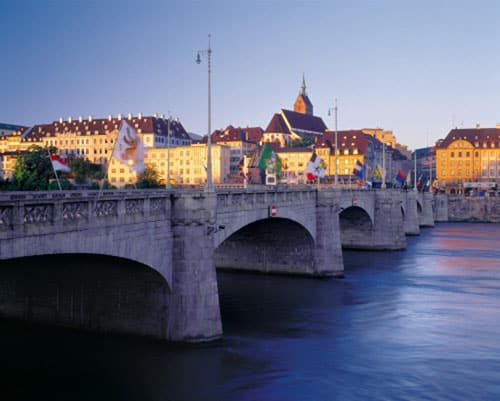
6. Basel

Bisected by the Rhine, and nestled between Germany and France, Basel is the third largest city in Switzerland. Given its geographical position it should come as no surprise that a diversity of cultures, a multifaceted history and modern art and architecture converge here.
Travelers know the city for its historic landmarks, including the large market square with its richly decorated red sandstone town hall and the late Romanesque-Gothic cathedral. Basel is known as “The City of Art” and its nearly 40 museums give it the highest density of museums in the country. Among them are the internationally known Basel Art Museum, the museum devoted to the iron sculptor Jean Tinguely, the Fondation Beyeler and the Museum of Cultures, all of which attract a great many visitors, as do several galleries and playhouses and its symphony orchestra, chamber orchestra and musical theatre featuring international productions.
The yearly Fasnacht (Carnival) is the most important celebration for the people of Basel. On the Monday following Ash Wednesday the city rises with the “Morgenstraich,” a colorful and brilliant procession through the streets of the city that begins when the lights of the city are extinguished at exactly 4:00am..

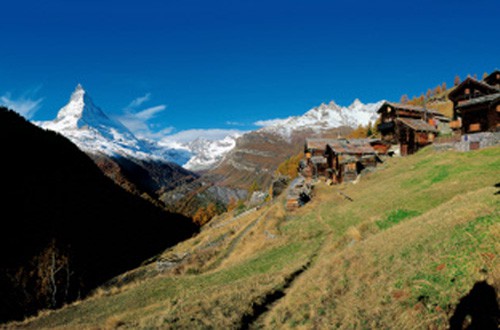
7. Zermatt

In the Valais region of Switzerland, popular Zermatt lies at the foot of Matterhorn, the most photographed mountain in the world. Its location in the middle of an enormous hiking and ski region makes it one of the world’s most attractive vacation villages.
The ski region encompasses 63 mountain railways and more than 200 miles of slopes. The region called “Matterhorn Glacier Paradise“ is Europe’s largest and highest-lying summer skiing region, a place where many national ski teams train in the summer.
The region is also legendary amongst mountaineers: the Haute Route, a challenging international route that takes several days to complete, leads from Mont Blanc to Zermatt. Over 400 kilometers of hiking trails lead through and out of the Matter Valley, including the mule traders’ trails, which date back to the 13th century.
Zermatt’s hotels and restaurants are world-class and the air is clear, dry and clean – likely due to a law enacted in 1947 that allows only electric cars without a combustion engine to operate in the village.

8. Engadin St. Moritz

Located at 1,800 m above sea level in the alpine canton of Graubünden, and blessed with 322 days of sunshine a year, the 13 towns and villages of the Engadin St. Moritz region enjoy a gloriously mild microclimate. Travelers are lured here by a unique combination of chic atmosphere, authentic village tradition and unspoiled nature. The Upper Engadin provides spectacular mountain views, a seemingly endless expanse of lake plateau and, to some, a magical quality in the light.
The area has a fascinating cultural heritage – while Romansch is its official main language, German is spoken in St. Moritz, Italian in the neighboring valleys, French at the Club Med and a lot of English at the Cresta Run, a ¾ mile long toboggan track that winds its way from St Moritz down past the tiny hamlet of Cresta, to the village of Celerina.

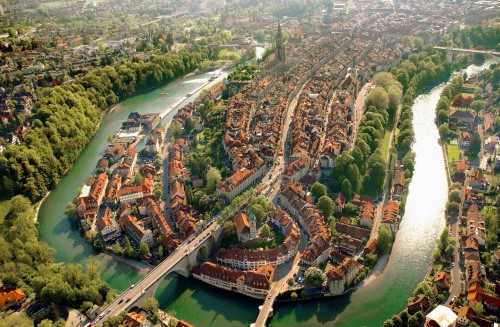
9. Bern

Of all of Switzerland’s cities, Bern, the capital city, is perhaps the most immediately charming. Crammed onto a steep-sided peninsula in a crook of the fast-flowing River Aare, its quiet, cobbled lanes are lined with sandstone arcaded buildings that have changed little over the past 500 years with the exception, perhaps, of the addition of modern shop signs and the odd car or tram rattling past.
The hills all around, and the steep banks of the river, are still heavily wooded. The old town of Bern is a UNESCO World Heritage Site, thanks in part to its four miles of arcades, which the locals refer to as “Lauben,” making it the longest weather-sheltered shopping promenade in Europe. Views of the area, especially of both the Old Town’s clustered roofs and of the majestic Alps on the horizon, are beautiful.

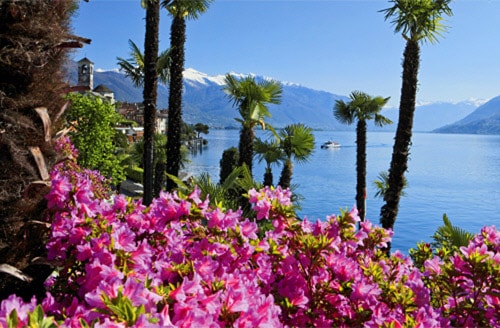
10. Ticino

The Mediterranean region seems to begin on the southern side of the Alps in Ticino. There is a feel of Italy here, with palm trees and citrus trees scattered about, and streets winding their way down to little piazzas. This is Switzerland’s only Italian-speaking canton and here the Italian love of food, wine and la dolce vita somehow finds harmony with the Swiss respect for regulations and rules.
The city of Bellinzona, capital of the canton, and the valleys of Upper Ticino are beautiful and home to a rich gastronomy, fascinating art and wide stretches of unspoiled nature. Bellinzona’s three castles, defensive wall and ramparts of the old market town are listed as World heritage Sites by UNESCO. The city of Lugano, set on the lake of the same name, is Switzerland’s third financial center.
The Lake Maggiore region is exceptionally rich in contrasts and packed with variety – from the palm-lined lakeshores to glaciers, chic shopping and ancient traditions. The lakeside town of Locarno enjoys what is probably the best climate in Switzerland, with nearly 2300 hours of sunshine a year and an average annual temperature of 60°F. The town has several cultural events, including an international Film Festival.
The Mendrisiotto Region of Ticino s particularly well known for the delicious food and wine. At its traditional inns (called grotto) you can taste a wide variety of Ticino specialties and wines produced in the region.

And one additional…

11. Appenzell

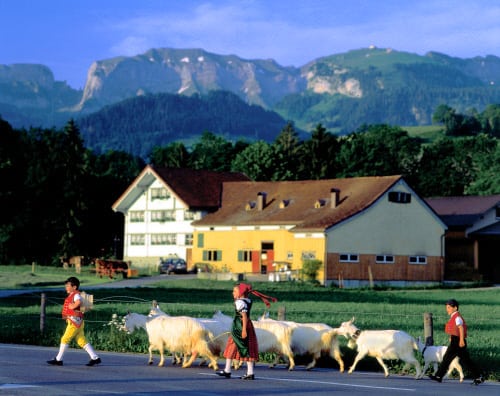
The village of Appenzell and the Canton of Appenzell Innerrhoden are situated in a singularly beautiful landscape of rolling hills. The region is known for rural customs and traditions such as the ceremonial descent of the cattle in autumn and cultural events such as folk music and rustic dances, as well as hiking and biking tours in the Alpstein region.
With about 7,000 inhabitants, Appenzell is the political, economic and cultural center of Appenzell Innerrhoden, the smallest Swiss canton. The car-free village beckons with pretty lanes and a myriad of small stores and boutiques that are ideal for shopping and browsing. The facades of the buildings are decorated with frescoes. Appenzell Museum, which is in the town hall, shows a cross section of Appenzell’s history and culture.
A dense network of hiking trails crisscrosses the hilly landscape of Appenzell. The Alpstein region with 2500-meter-high rock formations lends itself to challenging hiking tours and climbing trips. Approximately 200 kilometers of cross-country tracks and three popular ski areas beckon in the winter.

copyrights belongs tohttp://www.neverstoptraveling.com

Malaysia


10 Best Places to Visit in Malaysia


If countries were awarded for diversity, Malaysia would top first place. Not only is Malaysia a melting pot of ethnic cultures, but it is also a blend of many different customs, cuisines and religions all coexisting peacefully together. From large island groups to mountains, fertile highlands and tropical rainforest, the country’s geography is every bit as diverse. What’s more, Malaysia is a unique country in that is divided into two main landmasses. West Malaysia occupies the southern half of a peninsula shared with Thailand, while across the South China Sea is East Malaysia, situated on the Borneo island. This overview of the best places to visit in Malaysia concentrates on its cultural, historic and natural attractions. For an insight in Malaysia’s most popular islands & beaches see this island list.

10Kota Bharu
Kota Bharuflickr/exfordy
Often used as a stopover by many travelers visiting the beautiful Perhentian Islands, Kota Bharu offers its own unique charm, attractions, shopping and cuisine. Located in Peninsular Malaysia near the Thailand border, Kota Bharu is the capital of the Kelantan State, a city easy to get around in by foot, bus and taxi.

9Melaka
Melakaflickr/yeowatzup
Commanding an important position on the busy sea route between India and China on West Malaysia’s southwestern coast, Melaka was ruled and battled over for centuries between Indian, Portuguese, British and Dutch governments. As a result, this modern day Malaysian city is now one of the best places to visit in Malaysia packed with architecture, culture, traditions and cuisine all reflecting its rich heritage.

8Cameron Highlands
Cameron Highlandsflickr/Will Ellis
Providing a cool escape from the heat of the lowlands, the Cameron Highlands in the Titiwangsa Mountains are one of Malaysia’s oldest tourist destinations. Developed with an English garden charm, this beautiful tableland offers lush scenery, colorful flower farms, tea plantations, forests, lakes, wildlife and outdoor recreation.

7Kota Kinabalu
Kota Kinabaluphoto/Flanegan
The capital of the Sabah State in Malaysian Borneo, Kota Kinabalu is a fast-growing tourist destination due to its close proximity to tropical islands, rainforests, wildlife refuges, national parks and Malaysia’s tallest peak, Mount Kinabalu.

6Kuching
Kuchingflickr/MiKa SH Wee
The largest city on Borneo Island, Kuching is a popular base for exploring Borneo’s rainforest and the state of Sarawak. However, Kuching offers plenty for tourists to see and do during their stay, from sightseeing historic landmarks to bustling markets and outdoor recreation.

5Penang
Penangflickr/Schristia
Located in the Strait of Malacca off West Malaysia’s northwestern coast, Penang Island is a popular tourist destination due to its historic George Town and rich culinary diversity. Its position along one of the world’s most traveled shipping routes has infused Penang with a colorful array of cultures, architecture and cuisine.

4Kuala Lumpur
Kuala Lumpurflickr/Sham Hardy
Less than 200 year ago, Kuala Lumpur was just a quiet tin-mining town in West Malaysia. Today, this same sleepy village has flourished into the country’s federal capital and largest metropolis. Commonly called KL by locals, this vibrant city is a cultural melting pot, noted for its impressive skyscrapers and buzzing scenes of shopping, dining and nightlife.

3Taman Negara
Taman Negaraflickr/wazari
Encompassing three states across the northern part of West Malaysia, Taman Negara is reputed to be the oldest tropical rainforest in the world. A popular ecotourism and adventure destination, this national park is teeming in in wildlife from rare plants to exotic birds and scarce animals like the Malayan Tiger, Asian elephant and Sumatran Rhinoceros.

2Langkawi
Langkawiflickr/trekker308
Located off Malaysia’s northwestern coast in the Andaman Sea, Langkawi is an archipelago of 99 islands boasting picturesque beaches, rainforest, mangroves and forest-clad mountains. In recent years, resorts, hotels, restaurants and other tourist facilities have developed in Langkawi, offering visitors the opportunity to experience the archipelago’s exceptional natural beauty.

1Gunung Mulu National Park
Famous for its extraordinary limestone karst formations and phenomenal cave systems, the Gunung Mulu National Park is one of the most awe-inspiring natural attractions in all of Southeast Asia. Located in Malaysian Borneo in the Sarawak State, this national park features some of the largest and longest cave systems in the world. Included in these is the world’s largest cave chamber, the Sarawak Chamber, which is estimated large enough to hold 40 Boeing 747 aircraft.

copyrights belongs to http://www.touropia.com

Dubai

Dubai Top 10 Tourist Attractions

New or moving to Dubai? We know there's so much to see and do so we've put together our 'favourites' list of the best things to do. Whether you're a resident  entertaining visitors or a tourist you'll be able to pull together a fabulous itinerary using our guide to Dubai's iconic and top attractions.

1. Burj Al Arab

burj al arab dubaiThe Burj Al Arab (Tower of the Arabs) is the world's only 7 star hotel and designed to resemble a billowing sail, the Burj Al Arab soars to a height of 321 metres, dominating the Dubai skyline making it the fourth tallest hotel in the world.

It truly is one of the most iconic symbols of Dubai and is a majestic building. No trip to Dubai would be complete without at least seeing it! There are various view points you can take photos from but one of the best is from the public beach next to it... there you will get that Dubai shot of you on the beach with The Burj in the back ground.

It is one of the most photographed structures in the world, and consistently voted the worlds most luxurious hotel. It is illuminated at night by choreographed lighting making it an impressive building day or night!

Check out our photos of the Burj Al Arab here>>

2. Burj Khalifa

burj khalifa dubaiThe Burj Khalifa is the world's tallest tower and is an amazing feat of engineering- the story of which you can see if you take a trip to "At The Top"- the highest viewing platform in the world.

The high point of any Burj Khalifa experience is the view from At The Top. Located on level 124 of the world's tallest tower, this observatory is destined to be the highlight of any visit to the Middle East.

The journey begins in the lower ground level of The Dubai Mall. Throughout the journey to the top, visitors are entertained by a multi-media presentation of the exotic history of Dubai and the marvel that is the Burj Khalifa.

EW top tip is to buy your tickets online in advance as you can save about 300 Dhs per person doing this. The slots sell out fast though- especially the sun set ones so make sure you get booked in in time!

3. The Dubai Fountains

the dubai fountainsAt the base of the world's tallest tower is one of the world's most amazing fountains! In fact it is the world's largest dancing fountain!

Set on the 30-acre Burj Khalifa Lake, the fountain shoots water jets as high as 500 ft, equivalent to that of a 50-storey building. The fountain is 900 ft  long and has five circles of varying sizes and two central arcs. It is designed by California-based WET, the creators of the Fountains of Bellagio in Las Vegas.

The Dubai Fountain performs daily, with the performance repertoire including Sama Dubai; Baba Yetu, an award-winning song in Swahili; the Arab world’s top-selling dance number Shik Shak Shok; and the signature piece of world-renowned Italian tenor Andrea Bocelli, Con te partiro (Time to Say Goodbye).

Over 6,600 WET Superlights and 25 colour projectors create a visual spectrum of over 1,000 abstract attractions. The beam of light shining upward from the fountain can be seen from over 20 miles away, and will be visible from space making it the brightest spot in the Middle East, and quite possibly in the entire world.

Dubai Fountain Show Timings:
Sunday to Wednesday
1.00pm and 1.30pm
6:00pm - 11:00pm every 30 minutes

Thursday to Saturday
1pm and 1:30pm
6:00pm to 11:30pm


4. Atlantis Hotel

atlantis hotel dubai
Atlantis is the majestic resort in Dubai situated on the Palm, a man-made island that has captured the world’s imagination with its magnificent scale and ingenuity.

From the moment you arrive, you will be immersed in a dazzling world of imagination, pleasure and luxury of 5-star hotels.

The resort offers relaxation and thrills for couples and families alike, including:

Unique marine habitats- The Lost Chambers
An exhilarating water park- Aquaventure
Pristine white beaches
World-class cuisine in 18 restaurants,
An indulgent spa (ShuiQi) to awaken your senses
Cosmopolitan boutiques to shop until your heart is content

5. Global Village

global village dubaiFor the past 15 years, Global Village has been providing cultural entertainment along with an international shopping experience to millions of visitors.

Breathtaking live performances, mouth-watering cuisine, authentic handicrafts and merchandise from different countries await you at the many national pavilions in Global Village.

There are many more attractions, including thrilling rides, games and firework displays, to complete your visit. Global Village is open from November to March every year, some year's the extravaganza is extended sometimes well into April - it's worth checking their website for more details if your trip falls over the March / April cut off.

6. Palm Island

Palm Island DubaiPalm Jumeirah has everything you need to enjoy a wonderful holiday break. World famous hotel names, amazing tourist attractions, luxury fashion and shopping malls are starting to open up. Whether you just want to relax or immerse yourself in an exciting world of leisure and entertainment, this is a truly inspirational holiday destination in Dubai.

Visitors will come to enjoy the magnificent sunsets, unwind in the spas, pools and gardens and eat out at the fine selection of restaurants. There's a wide range of daytime activities, including water sports, aquariums, theme parks and of course miles of beautiful beaches. And at night, the bars, clubs and shows will offer plenty of fun and amusement.

7. Dubai Creek

dubai creekThe natural seawater inlet that cuts through the centre of the city is the historical part of Dubai where visitors can take an abra (small water taxi) and view the old trading port and the dhows from the water.

A cruise to Al Maktoum Bridge will pass many of the city's historic as well as modern landmarks. A stroll around the wharf offers a picturesque glimpse of Dubai's trading heritage, where dhows bound for distant places dock to unload their goods.

Click here to see our Dubai Creek photo gallery>>

The Creek, a natural sea water inlet which cuts through the centre of the city, is the historic focal point of life in Dubai. A stroll along its banks evokes the city’s centuries-old trading traditions.

Visitors will be captivated by the colour and bustle of the loading and unloading of dhows which still ply ancient trade routes to places as distant as India and East Africa.

8. Ski Dubai

Ski DubaiSki Dubai is the first indoor ski resort in the Middle East and offers an amazing snow setting to enjoy skiing, snowboarding and tobogganing, or just playing in the snow. Young or old, there is something for everyone, from the beginner to the snow sport enthusiast. Ski Dubai is a unique mountain-themed attraction that offers you the opportunity to enjoy real snow in Dubai all year round.

You don't have to worry about ski clothing or equipment either. Ski Dubai has thought of it all and offers guests the use of winter clothing, ski and snowboard equipment. Your skis will carry you down the slope and our quad-chairlift and tow lift will promptly carry you back to the top for another run.

9. Dubai Marina

Dubai Marina SkylineOne of Dubai's newer tourist attractions is Dubai marina. The marina is set in the backdrop of the amazing buildings of JBR and has great views, walkways and boat rides available. It is amazing either during the day or in the evenings. Dubai Marina is the largest man-made marina in the world and is home to super yachts and also Dubai Marina Mall.

Set in the heart of ‘new Dubai’, Dubai Marina Yacht Club (DMYC) has rapidly gained a reputation as one of the renowned private yacht clubs of the region, with a purpose built clubhouse forming the centre-piece of four distinctive marinas. Arrayed along the length of a remarkable 3.5km canal, the marinas provide sheltered berthing for over five hundred yachts, in a setting that is simply unrivalled.

With a choice of casual or fine dining restaurants, a lively Sports Lounge, or the tranquillity of the club lounges, all ensure that the clubhouse is a place of refuge throughout the week and not just simply a weekend get-away. For the keen yachting enthusiast, the club organises the increasingly renowned ‘Cruising Club’, which offers exclusively to DMYC members the opportunity to explore regional yachting destinations, and to join the regular series of workshops and seminars with fellow yachtsmen.

10. Wild Wadi

Wild Wadi Park DubaiLocated in front of the  Burj Al Arab, Wild Wadi offers 30 rides and attractions for all the family.

Wild Wadi is themed around the tale of Juha, a known character from the Arabian folklore.

Wild Wadi Timings:

November to February: 10am - 6pm
March to May: 10am - 7pm
June to August: 10am - 8pm
September and October: 10am - 7pm


copyrights belongs to http://www.expatwoman.com

Turkey


10 Best Places to Visit in Turkey


With cities steeped in history, beaches, and beautiful countryside, a visit to Turkey promises an enchanted vacation. Diverse offerings such as the ancient ruins of Ephesus to the luxury beach resorts along the Aegean Sea will enthrall and captivate even the most jaded traveler. Istanbul, once the capital of the Byzantine and Ottoman Empires, features prominently in most travel plans but there are many more great destinations. An overview of the best places to visit in Turkey.

10Ankara
Ankaraflickr/peretzp
Turkey’s capital city, Ankara, is a sprawling, modern city home to government buildings, commercial businesses, universities and foreign embassies. Located right in the center of the country and the Anatolia region, Ankara is an important transportation hub, linking travelers to other major destinations in Turkey. The city itself city offers a lively arts and culture scene with a large concentration of museums, including the Museum of Anatolian Civilizations.
9Mardin
Mardinflickr/miy1988
Perched on a strategic hilltop overlooking the plains of Mesopotamia in southeastern Turkey, Mardin is the capital of the Mardin Province. One of the oldest settlements in the region, Mardin is best known for its cultural diversity and Old City of sandstone buildings that cascade down the hill.
8Konya
Konyawikipedia/Mladifilozof
One of the oldest cities in the world and best known for its remarkable Seljuk architecture and Whirling Dervishes,Konya is a large city in Turkey’s Central Anatolia Region. In the 12th and 13th centuries, Konya prospered as a capital city under the rule of the Seljuk Dynasty. Today, attractive buildings from that era can still be admired such as the Alaeddin Mosque and the ruins of the Seljuk Palace.
7Antalya
Antalyaflickr/astique
Nestled along the beautiful Turkish Riviera on the Mediterranean coastline, Antalya is a large, vibrant city welcoming tourists with numerous resorts, hotels, bars and restaurants. Spectacular scenery frames the city with gorgeous beaches and lush green mountains dotted with ancient ruins. From swimming and sailing to mountain climbing, sightseeing and family fun, Antalya offers something for everyone.
6Marmaris
One of Turkey’s most popular seaside resorts, Marmaris is a picture-perfect setting of pine-clad mountains, sandy white beaches, turquoise waters and historic architecture. Located along the Turkish Riviera in southwest Turkey, this stunning cruise port is a tourist paradise with exceptional sightseeing opportunities, water sports, adventure, fantastic dining and buzzing nightlife.
5Side
Side
A major port in ancient Pamphylia and occupied by Alexander the Great in 4th century BC, Side today is a picturesque town of classic ruins and modern day resorts overlooking sandy white beaches. Located on a small peninsula, Side offers fantastic sightseeing, dining and nightlife. Its star attraction is an excavated site of ancient Hellenistic and Roman ruins that include the remnants of a colossal amphitheater and various temples.
4Bodrum
Bodrumflickr/myhsu
Located in the southern Aegean region of Turkey, Bodrum was once home to the Mausoleum, one of the Seven Wonders of the Ancient World.Today, its intriguing ruins, stunning beaches and cliff-top resorts attract people from all over the world. No visit to Bodrum would be complete without seeing the Castle of St. Peter, also known as Bodrum Castle. Built from 1402 by the Knights Hospitaller it now operates as a museum.
3Ephesus
Ephesusflickr/guillenperez
By the 1st century BC, Ephesus was one of the largest cities in all of the Roman Empire, boasting one of the Seven Wonders of the Ancient World, the Temple of Artemis. The ruins of Ephesus are well preserved and contained within a large archaeological site, making it one of Turkey’s most popular tourist attractions. Its attractions include the massive Theater, the Temple of Hadrian and the magnificent Celsus Library, a two-story structure that was built to house more than 12,000 scrolls.
2Cappadocia
Situated in Central Anatolia, Cappadocia is best known for its fairytale landscape of unusual formations resembling chimneys, cones, mushrooms and pinnacles. Natural processes such as ancient volcanic eruptions and erosion have all sculpted these odd formations over the ages. Thousands of years ago, mankind added remarkable touches to the landscape by carving out houses, churches and underground cities from the soft rock.
1Istanbul
Once serving as the capital of the Ottoman and Byzantine Empires, Istanbul today is the largest city in Turkey and one of the largest in the world. Istanbul stretches across a narrow strait that connects Asia and Europe, making it the only city in the world spanning two continents. Impressive architecture, historic sites, dining, shopping, nightlife and exotic atmosphere all make Istanbul one of the best places to Visit in Turkey.
copyrights belongs to http://www.touropia.com